Fuel spill incidents involving diesel or gasoline are more common than many trucking operators realize. Whether caused by tank ruptures, accidents, or hose malfunctions, these spills can lead to severe environmental hazards, highway shutdowns, hefty fines, and long-term business disruptions. That’s why having access to reliable fuel spill cleanup services is not just important — it’s absolutely critical for commercial carriers and fleet managers in Houston.
Prompt emergency response minimizes pollution, reduces fire risks, and ensures compliance with federal and state regulations. In busy logistics corridors like Houston, spill containment must be handled with professional-grade equipment and trained hazmat responders to prevent soil or water contamination.
For trucking companies operating in Houston, understanding the complete cleanup and remediation process is essential. Our comprehensive guide builds upon insights shared in the
Complete Guide to Hazmat Spill Cleanup Services — especially for situations where fuel spills escalate into hazardous material incidents requiring specialized handling.
Understanding Fuel Spills: Causes, Risks, and Classification
Fuel spills occur when diesel, gasoline, or oil escapes from a truck due to mechanical failure, collision, overfill, or improper handling. These incidents often happen during refueling, tanker unloading, or after impact-related equipment damage.
Common Causes of Fuel Spills
Tank punctures after rollover accidents
Faulty hoses, valves, or connections
Overfilled tanks during refueling
Fuel leaks from worn-out gaskets or damaged lines
Improper handling during hazardous material transport
Fuel Spill vs. Hazmat Spill — What’s the Difference?
Not all fuel spills are automatically classified as hazardous material incidents. Small diesel spills on paved surfaces may be considered non-hazmat events if safely contained. However, once fuel reaches soil, drains, waterways, or creates an ignition risk — it becomes a regulated hazardous material spill.
To understand the difference, refer to
Difference between hazmat and non-hazmat cleanup — which explains when standard fuel cleanup crosses into hazmat territory requiring certified intervention.
Fuel spills are dangerous due to flammability, environmental impact, liability risks, and health hazards — making professional response critical.
Fuel Spill Regulations Trucking Companies Must Follow
Fuel spill cleanup is governed by strict federal and state regulations designed to protect public safety and the environment. Trucking companies operating in Houston must comply with guidelines set by the following agencies:
Key Regulatory Bodies
EPA (Environmental Protection Agency) – Oversees hazardous material reporting, cleanup, and documentation.
DOT (Department of Transportation) – Regulates Hazmat transport requirements, emergency response labeling, and containment standards.
TCEQ (Texas Commission on Environmental Quality) – Enforces state-level spill reporting, remediation, and environmental protection rules.
Reporting Thresholds
Diesel or gasoline spills over 25 gallons must be reported immediately.
Any spill affecting soil, drains, water, or vegetation requires mandatory cleanup documentation and environmental restoration.
Failure to report a spill can lead to civil penalties, insurance claim denial, or criminal liability.
To ensure safer compliance, trucking companies should use certified cleanup teams with proper gear. Learn more in
Hazmat Equipment and Safety Protocols Every Trucking Company Must Follow.
Step-by-Step Fuel Spill Cleanup Process
Initial Assessment and Safety Measures
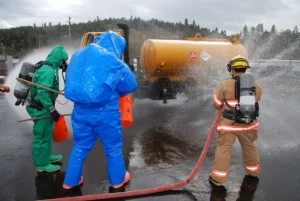
Once the spill is detected, the first step is to secure the area and prevent further contamination. Traffic is redirected, ignition risks are assessed, soil and drainage nearby are inspected, and responders wear PPE (boots, gloves, suits, respirators) for safe handling.
Calling Certified Fuel Spill Cleanup Services
Only licensed and trained professionals are legally allowed to manage fuel or hazardous material spills due to environmental, health, and regulatory concerns. Certified responders use advanced containment, extraction, and disposal methods to ensure full compliance.
For certified Hazmat spill response in Houston, trucking companies rely on specialized service providers such as
Hazmat Clean-Up for emergency fuel, oil, and chemical spill handling.
Fuel Containment and Absorption
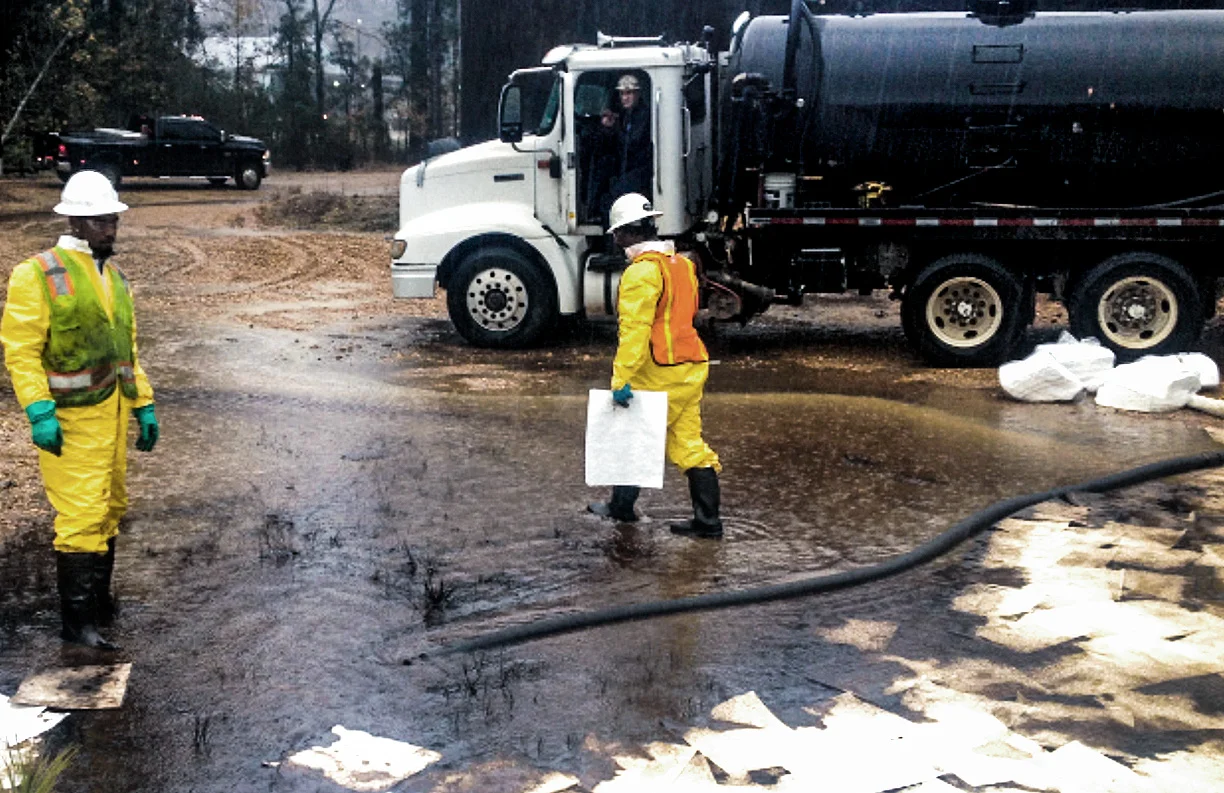
After isolating the area, cleanup specialists deploy:
Drain protectors
Fuel absorbent pads and booms
Spill berms
Vacuum extraction units
Recovery tanks are used to collect leaked fuel, while absorbent granules help remove slickness and prevent environmental seepage.
Soil, Water, and Property Decontamination
Once surface fuel is removed, deeper cleaning begins. Soil testing determines contamination level, followed by soil excavation or biological remediation. If fuel enters drains, water extraction and filtering are performed to comply with EPA guidelines.
For a detailed breakdown of how these cleanup procedures are performed safely, refer to
Hazmat Cleanup Process Explained.
Waste Disposal and EPA Documentation
Finally, all contaminated materials — soil, pads, booms, and extracted fuel — are packed, labeled, transported, and disposed of in designated hazardous waste facilities. Reports are submitted to EPA, DOT, or TCEQ based on spill severity.
Role of Professional Fuel Spill Cleanup Companies
Outsourcing to professional spill cleanup providers gives trucking companies a major advantage in emergency response, compliance, safety, and documentation. These specialists bring experience, tools, certifications, Hazmat licensing, and insurance support.
Key Qualifications to Look For:
Hazmat certification
Emergency response availability (24/7)
Waste transport license
EPA-compliant documentation
Experience in trucking spill incidents
To find the right cleanup provider in Houston, check
How to Choose the Best Hazmat Cleanup Companies in Houston — which explains what qualifications, pricing models, and response capabilities to look for.
Necessary Equipment for Fuel Spill Cleanup
Professional cleanup requires specialized tools designed to contain, recover, and neutralize spilled fuel.
Essential Equipment Includes:
Portable spill kits (pads, booms, pillows)
Vacuum tankers for fuel recovery
Remediation trucks with high-capacity extraction
PPE for Hazmat crews
Soil testing kits
Drain protectors and spill berms
To learn more about required safety tools, training, and equipment for trucking-related spill response, explore
Hazmat Equipment and Safety Protocols Every Trucking Company Must Follow.
Cost Factors Involved in Fuel Spill Cleanup
The cost of fuel spill cleanup services varies depending on several critical factors, including spill size, location, surface type, environmental exposure, and disposal needs.
Major Factors Affecting Cost:
Spill Size and Coverage Area: Larger spills require more absorbents, labor, and time.
Type of Surface Contaminated: Cleaning paved roads is cheaper than soil, vegetation, or water.
Environmental Risk Level: Spills affecting drains or soil require extensive remediation.
EPA Reporting and Documentation: Compliance reporting and waste transport add to cost.
Emergency Response Time: After-hours and rapid-response services cost more.
For comparison, you can also check what impacts cleanup costs for hazardous materials through
Factors That Affect Hazmat Cleanup Cost for Trucks in Houston.
Trucking companies can reduce long-term expenses by partnering with trained cleanup providers who also offer preventive Hazmat equipment guidance and roadside support.
Preventive Strategies to Avoid Fuel Spills
Avoiding spills is always more cost-effective than cleaning them. Prevention begins with proper vehicle maintenance, driver training, regulatory compliance, and safe fueling procedures.
Practical Spill Prevention Strategies
Conduct routine inspections of tanks, hoses, valves, and fittings.
Use high-quality fuel caps and pressure-tested tanks.
Train drivers on spill prevention, reporting protocols, and emergency actions.
Implement a spill response plan to reduce reaction time.
Use wheel alignment and tire repair services to prevent accident-related leaks.
Support services like Wheel Alignments and Trailer Repairs help minimize risks by improving vehicle stability, reducing rollover accidents, and preventing tank damage.
Roadside Support You Can Count On
No matter the situation, our reliable roadside assistance ensures you get the help you need, fast. From breakdowns to emergencies, we’re here 24/7 to keep you moving.
Training, Documentation, and Emergency Response Planning
Trucking businesses must develop and maintain an organized emergency response plan that includes driver training, documentation protocols, and reporting procedures.
Key Components of an Effective Spill Response Plan:
Spill reporting protocols and responsible personnel
Emergency contact information for cleanup providers and insurance
Spill kits installed in all commercial vehicles
Driver Hazmat training and incident documentation forms
To implement safety protocols and equipment strategies for fuel handling, explore
Hazmat Equipment and Safety Protocols Every Trucking Company Must Follow.
Having a trusted partner for emergency response like Roadside Service can help companies accelerate recovery and reduce liability.
Choosing the Right Fuel Spill Cleanup Service in Houston
Selecting the right partner is crucial for compliance, safety, documentation, and long-term protection of your fleet.
Criteria for Selecting the Right Partner
24/7 emergency spill response availability
Licensed for Hazmat transportation and disposal
TCEQ & EPA-compliant cleanup procedures
Advanced equipment & remediation technology
Offers towing and post-incident vehicle recovery support
To choose safely and efficiently, refer to
How to Choose the Best Hazmat Cleanup Companies in Houston.
Trucking companies in Houston also benefit from service providers that specialize in both spill response and recovery, such as
Towing and Recovery and Hazmat Clean-Up — ensuring full-service support from containment to restoration.
Frequently Asked Questions About Fuel spill cleanup services
The trucking company, fleet operator, or driver is generally responsible for reporting spills to TCEQ or EPA, depending on severity. Any spill that affects soil, drainage, vegetation, or exceeds 25 gallons must be officially reported.
Fuel spill cleanup focuses mainly on diesel or gasoline spills. However, if fuel contaminates soil, water, storm drains, or becomes a fire hazard, it becomes a hazmat spill and requires certified Hazmat Clean-Up services.
Minor spills may be cleaned within 1–3 hours, while soil or water contamination can take several days depending on EPA documentation, soil testing, and restoration requirements.
Small non-hazmat spills can be managed with spill kits, but larger or hazardous spills require professional cleanup due to legal, environmental, and safety risks.
Park safely, turn off ignition, secure the area, use spill kits if available, and contact certified fuel spill cleanup services immediately — while reporting to the fleet manager.